
Brewing like a Bronze Ager
In the latest podcast episode of Basic Brewing Radio (“Bronze Age Brewing”, aired January 3, 2013) host James Spencer interviewed Ian Hill of the Heritage and Archaeological Research Practice based in the UK, about an ancient “microbrewery” structure discovered by University of Manchester archaeologists at the Bronze Age settlement of Kissonerga-Skalia, near the modern city of Paphos in Cyprus. A link to the story on the Telegraph’s website is below.
Bronze age ‘microbrewery’ discovered in Cyprus
The structure is dated to around 1600 BCE, and included an oven the archaeologists believe was used as a malting kiln, mortars for manual grain crushing, a hearth and clay pots. And you thought your drill-powered malt mill and 60,000-BTU propane burner constituted a bare-bones brewing system …
The conclusion that the structure was a malthouse/brewery came mostly through process of elimination, as Hill explains in the podcast. Some barley was found nearby along with fig seeds, which suggests a barley-based beer, perhaps with some smoked malt flavor as an accidental result of the kiln being contained in such a small space – a theory supported by smoky residue on the walls of the structure. The figs may have been a flavor additive, or may have been added to the wort to start fermentation via the introduction of wild yeast living on the figs’ skin.
Hill went on to explain how in August of 2012, he and some others on his team reconstructed the structure offsite to try malting some grain using the Kissonerga-Skalia setup, then brewed some beer with the grain they malted.
They made several batches with different parameters. Mash thicknesses varied, but the thinnest was 7 liters per kilogram of grain, which works out to 3.36 qts/lb, a thin mash but well within the range of no-sparge “Brew in a Bag” techniques. They doughed in at 70°C (158°F) and kept the mash temperature above 65°C (149°F): pretty typical mash. Although the Bronze Age beer probably was not boiled, Hill’s team boiled theirs to sanitize it. They did not add any hops.
They pitched one batch with crushed figs to emulate the wild fermentation technique speculated for the ancient beer. A second batch was pitched with grapes (also a source of wild yeast) instead of figs. A third batch was fruit-free and pitched with brewer’s yeast as a control. I won’t spoil the results – the podcast is short and fun, and completely worth listening to.
Idea time. I’d like to take the plunge into making an “ancient” beer of my own. I’m a history lover – the older the better – and like the idea of getting in touch with my ancient brewer ancestors by trying out their ingredients and techniques. Patrick McGovern’s book Uncorking the Past: The Quest for Wine, Beer, and Other Alcoholic Beverages is an inspiring read, and I love the work he’s done with Dogfish Head on beers like Midas Touch and Chateau Jiahu. But until now I haven’t had the motivation to get off the fence and dive in with an ancient recipe of my own.
Until now. The figs are speaking to something deep in my soul. Maybe it’s because at Christmas, someone in the family raided the canister of my aunt’s famous Italian fig cookies before I could, and I’ve been craving them ever since. And my recent introduction to historical brewing – Colonial Progress Ale – ended up tasting pretty damn good and has gotten great reviews from friends. I’m feeling ambitious.
So I’m going to brew a Kissonerga-Skalia beer with some smoked malt. I don’t think I’ve got the figs to do an all-wild fermentation, but I would like to try cultivating dregs from a bottle of Midas Touch. And I will use some fig somewhere in the brew for flavor and additional sugar. It sounds like a good spring beer, so that gives me between now and early February to put together a recipe.
In the meantime, I’ll remember a quote from Ian Hill in the podcast that stuck with me: “Archaeologists love their beer, so it’s not a bad thing to find.” Indeed.
The Buddha and the King
On a beautiful, cool Saturday afternoon wedged between days of thunderstorms, Jester King Craft Brewery released their new Buddha’s Brew ale during their weekly open house. Beer hipsters (and garden variety hipsters) descended on the brewery for a turnout that scuttlebutt suggests was the biggest the brewery has ever seen on a “non-event” Saturday.
The new ale is a collaboration between Jester King and Austin kombucha company Buddha’s Brew. It’s Jester King’s first beer fermented entirely in oak. The wheat ale wort was pitched with bacteria and fermented in the barrel, then aged for nine months before blending it with Buddha’s Brew Classic Flavor Kombucha. Buddha’s Brew was also on location Saturday giving out free kombucha by the sample and cup. I’ve been a fan of their kombucha for years, so I was excited about the collaboration.
I haven’t been to Jester King in several months, so I was surprised to find a new system in place for the beer tasting. In the old system, $10 bought you a tulip glass and three full pours of whatever you wanted. Now, for $10 you get a card listing the day’s menu with a check box next to each of the 7 beers available:

One ticket to paradise, with a kombucha to go.
The bartenders poured 5.5 oz of whatever you ordered and marked the box next to it on the card. If you tried them all, it would equate to a little over two pints of beer and a keepsake glass for $10. So it’s not the steal it used to be, but it’s still a great value, especially if you can get there early enough to go back through the (very long) line 7 times during the 3-hour window they’re open. Even though this new system effectively raises the price per ounce over the previous system, it encourages beer flights instead of pounding pints as quickly as possible. The limited-release selections du jour are thus available to more attendees, and fewer frat boys are stumbling around drunk from too many Black Metals. I’m not sure if the new system was just for this event or if this is how they do it every week now, but I’m a fan of it in theory … if they can get the line moving a little faster.
I started with Buddha’s Brew, the hot new starlet on the set. It was straw-colored with little head and smelled like a Berliner Weisse: lactic, light and wheaty, though I was hoping for more fruitiness on the nose. It tasted like a Berliner Weisse too. Tart, refreshing and wheaty with some vinegar notes and a pleasant mouth-puckering tartness. My only complaint was that it was less complex than I expected. The kombucha didn’t add much flavor; no fruitiness, no earthiness. Nor any oakiness or vanilla from the barrel aging. It could have been any sour wheat ale, albeit a well-made one. Note that I would gladly drink it again if there weren’t more interesting beers available.


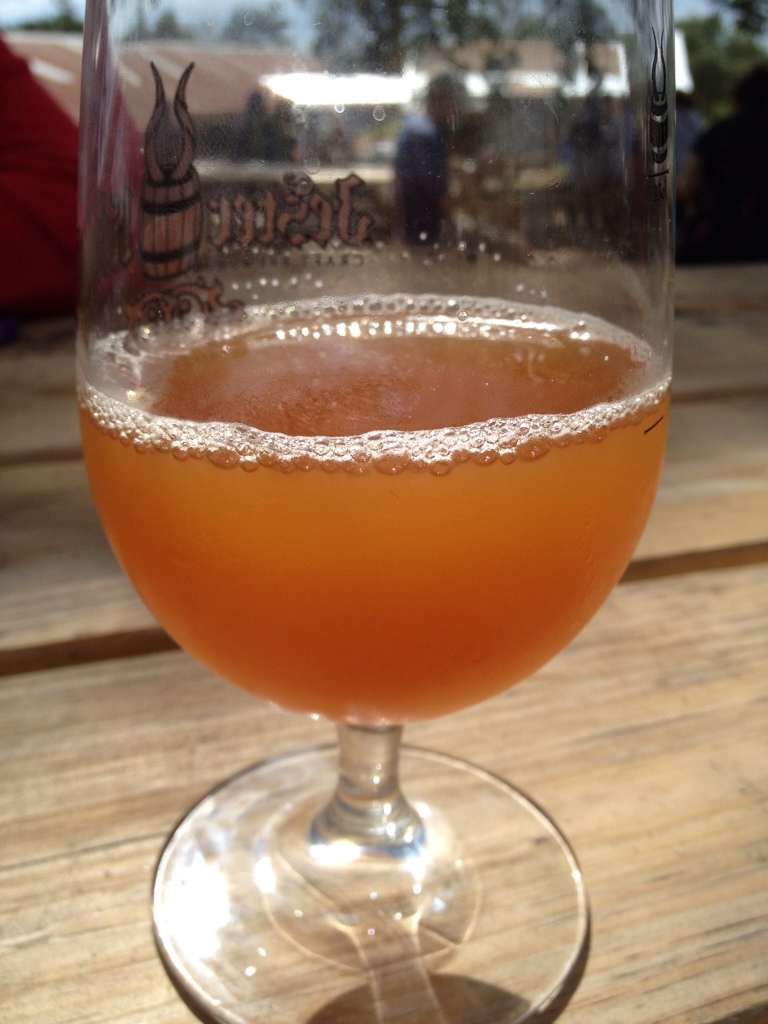
My third pour was Mad Meg, an organic bière de provision – a high-alcohol continental style intended for extended aging. At 9.6% ABV, it was a step up from my earlier tastings but smooth enough not to be a shock. It poured a handsome red-orange I attribute to Cara-Munich malt, but I enjoyed thinking of it as an “albino amber”. The aroma was mouth-watering: floral hops and a rich mandarin-like citrus with noticeable alcohol. The flavor didn’t disappoint, either, delivering piney hop bitterness at the start and boozy, bready malt on the finish with no alcohol burn. It was smooth and brilliantly balanced, easy to drink on a fall afternoon or warm enough for a cool night.
I made my way through the tastings leisurely and only got three in my 90 minutes there, but it was well worth the price of admission. Between beers I cleansed my palate with lots of free kombucha from the Buddha’s Brew tent (thanks!). Peach and Pineapple-Super Greens flavors were on tap and delicious.
I left happy (alcohol + probiotics, mmm mmm good!) and inspired. I’ve been thinking about homebrewing kombucha for a long time, and I might start soon using some Buddha’s Brew dregs to culture a starter SCOBY. Someday I actually hope to have draft kombucha in the kegerator for those non-beer occasions. I’m not sure I’ll ever use it in a beer myself, but who knows? And I toast Jester King for their innovation. After all, that’s what supporting local business is all about.
Tips for Retailers and Homebrewers alike
Close on the heels of the recent battle with my kegerator over the pressure of my kegs (which I’m happy to report has been stable at 8 PSI since my last post), I saw an article shared on Facebook dealing with storing and dispensing draft beer. The article, written by Julia Herz and published on craftbeer.com back in January, is here:
“Frosted Glassware Is Not Cool: Temperature Tips for Craft Beer Retailers” by Julia Herz
Ostensibly a “cheat sheet” for craft beer retailers to teach them to properly store, dispense and serve craft beer consistent with the demands of an ever-more-knowledgeable clientele of brew enthusiasts, it’s still great information for a homebrewer to have. Especially one who’s kegging and serving their homebrew on draft.
It’s also timely advice for a lot of Central Texas taprooms, now that we’re in the hottest month of the summer. Many bars here are used to serving tall frothy helpings of pee-colored American lager in frozen mugs to guys coming in off the hot asphalt and looking for something cold, wet and flavorless to slake their thirst … not knowing better, many of them assume colder is better and serve craft beer in frozen mugs too.
No.
Frozen glasses are never right for craft beer. Never. Seriously. They numb the tongue and desensitize the tastebuds. Next time you’re at a pub and you order a glass of some rare new offering from Belgium or California or Rehoboth Beach at $9 for 12 ounces, and your bartender brings it to you in a frozen glass: send it back.
I don’t care how hot it is outside. You paid premium for that beer. You deserve to taste it. And you should tell them so. Otherwise, how are they ever gonna learn?
The one thing in this article I don’t fully agree with is the assertion that all bottled and kegged beers should be kept refrigerated. For bars and pubs, maybe. They need to turn out the freshest product possible. But taken out of context and at face value, this “rule” can be interpreted too broadly.
Case in point: high-end bombers sold in groceries and liquor stores. Many beers sold in 750 ml bombers benefit from long-term storage before drinking. Brett ferments and wild ales, barrel-aged and oaked stouts/porters, barley wines, and Belgian abbey-style ales all develop interesting flavor characteristics when cellared correctly (read: cool – but not cold – and dark) for several months or more. The natural microbe and oxygen reactions that develop these flavors don’t happen at refrigerator temperatures.
But too many stores selling bombers are keeping them refrigerated, presumably in an attempt to keep these high-ticket items fresher (and sellable) longer. The problem for those of us who want to age them is that unpasteurized beers don’t respond well to going from room temp, to fridge temp, to cellar temp. It won’t turn them instantly to cat piss, but it’s not recommended. A bomber that’s been refrigerated at the store has effectively had its long-term aging potential reduced – even if you slowly raise the temperature and cellar it, it’s not going to have the shelf stability it would have had otherwise. I won’t buy refrigerated bombers unless I plan to drink them soon, and I’ve been politely informing the staff at a high-end grocery store in my neighborhood of this for several weeks. I’m sure I’m not the only one fighting this fight, and I’d hate to see this cheat sheet work against our efforts if misinterpreted.
But aside from this small split in our ideologies, I think it’s full of great information, and I hope you will too. Read, learn and enjoy. Prosit.
One Drink Minimum: Real Ale Beer Dinner at Easy Tiger (part 2 of 2)
Now that the hop-fueled insanity of IPA Day 2012 is over, back to my two-part review of last week's Real Ale Beer Dinner at Easy Tiger Bake Shop & Beer Garden. See here for Part 1.
We left off at …
Fourth Course: Scots Gone Wild Sour Real Heavy with venison liver mousse, black pepper cherry jam, arugula, country levain – The first three courses were all paired with beers made from the same Lost Gold IPA wort. The first new wort in the lineup was a single-barrel wild fermented Scotch ale. It was good, with floral and dark berry notes on the nose and a murky chocolatey red-brown color. It was tart and astringent, very refreshing and great for summer, and paired well with the very rich venison liver mousse. I love venison, though I'm not a fan of organ meat, and a quick glance around the room told me I wasn't the only one outside of my comfort zone. But with a little faith in the chef, I tucked in with an open mind, and I'm glad I did. A bite of the liver mousse spread on the levain bread with a chaser of the sour Scotch ale was fantastic, but the portion was big. I finished mine, but I saw a lot of unemptied plates.

Beer 4: Scots Gone Wild Sour Real Heavy
Fifth Course: Highlander Barrel-Aged Real Heavy with bone marrow, blood sausage, herb salad, fougasse – Before this next dish came out, the servers brought out an enormous pretzel-like bread (the fougasse, I believe). It was delicious, but there was no way the two of us at our table could fit more than a few bites in. The beer, also made from the Real Heavy wort above but aged in red wine barrels, was my least favorite of the night. It had little aroma and a bitter, medicinal flavor. After so much good beer and good food, it was a minor letdown. As for the food, this was my first time eating bone marrow, and it wasn't bad, but I preferred the blood sausage. The herb salad was very sparsely dressed, well-balanced to the strong, earthy flavors of the protein on the plate.

Beer 5: Highlander Barrel-Aged Real Heavy
Sixth Course: Vol. 15 Bourbon Barrel-Aged Russian Imperial Stout with bitter orange bread pudding, caramelized honey, figs, walnuts – Yep, you read right: Easy Tiger worked bread into the dessert as well (bravo, maestros). By this point, I was stuffed, but I finished this tasty and surprisingly light bread pudding. The beer hit all the notes one expects from a RIS, though my (perhaps desensitized) taste buds didn't taste much barrel character in the stout. And the stout may have gone better with a chocolate cake than with such a light bread pudding. After everything else, I couldn't finish the beer, and I wasn't the only one. I hate to waste, but there's only so much one can consume in an evening.

Beer 6: Vol. 15 Bourbon Barrel-Aged Russian Imperial Stout
So there you have it: a delicious dinner and a great beer flight. Easy Tiger and Real Ale truly went all out with each of their contributions and made a good team. The plating portions and the beer pours were impressive, and a great deal for $55 a head. On the other hand, smaller portions would likely have kept the appetites in the room going longer. Maybe even long enough for the less adventurous folks in the room to embrace those organ meats on the later plates.
But hey, Easy Tiger is learning as they go … and I recognize that “The portions were too big at my six-course gourmet microbrew dinner!” is totally a first-world complaint. So I'm not complaining at all. It's just an observation, and maybe will raise some awareness that could eliminate waste in the future.
As for Real Ale, I'd say they showed Austin that this now-old-standby in the local beer community still has some surprises up its sleeve. But they are bigger than the upstarts; and bigger, for a commercial brewery, means bigger risk. Smaller breweries can brew a small experimental batch and eat the cost of having to dump it if necessary, but a brewery the size of Real Ale takes a huge financial hit if they make a 60-barrel batch of something that turns out undrinkable. The trick of fermenting 3 different worts 6 different ways seems a good way for a brewery that size to experiment: if one of the beers turns out bad, there's still barrels and barrels of another beer they made from that wort they can still sell. Is that as exciting as the reckless abandon of a smaller brewery? Well, no … but it still can turn out a bunch of damn good beers, as Real Ale proved.
So thanks to Easy Tiger and Real Ale for a great night that left me happily stuffed and happily buzzed. I'm looking forward to the next one. Prosit.
One Drink Minimum: Real Ale Beer Dinner at Easy Tiger (part 1 of 2)
Last week Lisa scored tickets to a beer dinner hosted by Real Ale Brewing Company at Easy Tiger Bake Shop & Beer Garden in downtown Austin.
Easy Tiger opened earlier this year on East Sixth Street, promising fresh baked-in-house breads, ample taps, and a menu that goes beyond pizza, all just down the street from the chickenpox of dive bars and music venues that dot the sidewalks of what the kids call “Dirty Sixth”. This was Easy Tiger’s first beer dinner, and it showed – mainly through oversized portions; a good problem, really – but the dishes were tasty and the pairings on the mark.
It would’ve been hard to imagine it when I first moved to Austin, but Real Ale is now the big kid on the block in Central Texas craft brew. With every new brewery that sets up shop in the region, Real Ale becomes more and more the elder statesman, and they’ve been accused of letting themselves go stale, of not pushing the envelope. (Aside from their flagship ale Firemans #4, most of their beers fall firmly in the American-British spectrum of bitter/pale ales: an APA, a rye APA, an IPA, etc. … but they do make a fantastic barleywine and some nice German seasonals.) The lineup for this beer dinner seemed carefully choreographed to prove that the old dog still has some tricks in it, and while I’m not sure I bought the routine 100%, the beers were well-made and I had a fantastic time.
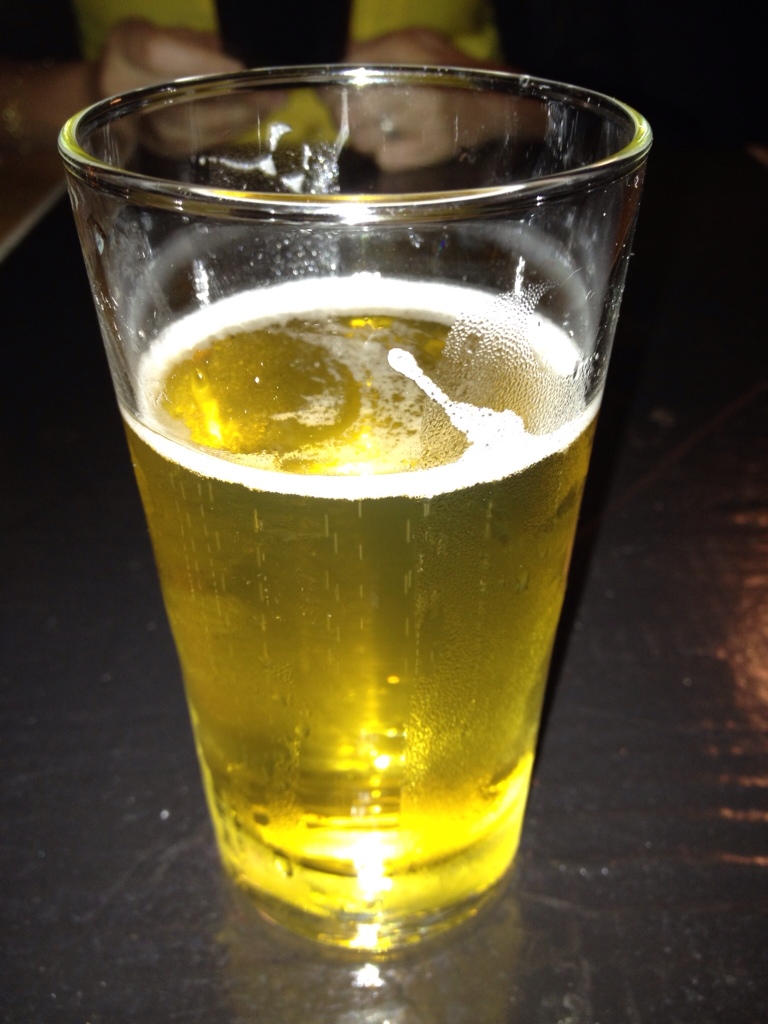
Aperitif: Firemans #4 – Before the first dish came out, we started with a 6-oz pour of Real Ale’s ubiquitous flagship blonde ale. If you haven’t tasted this beer, you haven’t been to Austin. It really is everywhere, and it’s been the gateway to craft beer for frat boys and good ol’boys in this town for years (not to mention a few people I know). Call it boring; but you can’t argue with its quality, and they brought out the freshest batch I’ve ever tasted for this event. Crisp, clean taste, a nutty continental malt aroma, and a noticeable but not intimidating noble hop flavor make this a beer you can buy a case of for that stubborn Bud drinker in your family, even for your mom. And I have.
Beer 0: Firemans #4
Then the marquee lineup started: 6 dishes paired with 6 beers, about 6 ounces worth of each (cue Iron Maiden). The trick I mentioned earlier was that these 6 beers came from only 3 different “wort streams” – this was a new term to me, but basically means simply that 3 different worts were fermented under different conditions to produce 6 different beers.
First Course: Lost Gold IPA with mussels, smoked tomato, fennel, leaks baguette – Real Ale’s aptly named year-round IPA pours a deep golden color. The aroma abounds with grapefruit and floral notes. The flavor is a modest but noticeable blast of hops that doesn’t fail to refresh. It went astoundingly well with a smokey mussel stew served family-style with a whole baguette (for two). We scraped the bowl, and it was a big bowl. And all I can say about the bread is, “OMG, bread!” You can tell it’s what Easy Tiger does best.

Beer 1: Lost Gold IPA
Second Course: Empire Barrel-Aged Lost Gold IPA with duck sausage, corn pudding, watercress – The second beer made from the Lost Gold IPA wort was aged in red wine barrels that left a blanket of sour cherry fruit notes on the whole thing. The hop aroma faded with the aging, as expected, but the bitterness remained, and the beer poured enticingly murky. A hint of pungent funk from the barrel complemented the rich, earthy duck sausage. The corn pudding was light and fluffy; it complemented the sausage just fine but was easily overpowered by the beer. The disparate elements of the dish worked better separately than as a single bite.

Beer 2: Empire Barrel-Aged Lost Gold IPA
Third Course: Imperium Wild Lost Gold IPA with apricot-braised goat, local shell pea cake, mint gremolata – The third version of Lost Gold was aged in similar barrels to Empire, but wild fermentation was induced for a funkier flavor. Floral notes took center stage on this one, and it was very dry, balancing very well with another rich protein dish. The apricot balanced both the gaminess of the goat and the funkiness of the beer. By now, I was really excited about what the night had in store. I was eating great food and enjoying the results of an experiment on how one wort could become three very different beers.

Beer 3: Imperium Wild Lost Gold IPA
Check back in a few days when I post my reviews on the last three pairings of the evening, and my overall impressions. It was a delightful and insightful night.
A Toast To … Art for Brewing’s Sake
As Central Texas is plagued by thunderstorms, I'm stuck in the house enjoying the last of a bottle of Mikkeller It's Alive! Belgian Wild Ale. And I'm raising my glass virtually to Dustin Sullivan, a fellow member of the online homebrewing forum HomeBrewTalk.com, and the creator of this awesome pictorial on how to make a yeast starter.

I love brewing. I love comic art. And I love anything that's educational in a novel and interesting way. This pictorial is all three, and I'm thrilled to have stumbled onto it. I wish everything in brewing could have been explained to me so simply when I was starting out. Sure, learning as you go is 50% of the fun of brewing (another 25% is drinking the results, and the last 25% is being able to impress your friends by dropping words like “saccharification” and “attenuate” into everyday conversation) … but I'm a knowledge addict, and I'm also pathologically risk averse. So I read everything I could get my hands on when I was starting my homebrew habit, so I'd have a good idea of each step of every process before I jumped in. Sometimes, it was hard to separate the good info from the bad: to separate the clear and “just-enough” from the over-explanatory, and to separate the simple sharing of helpful information from the vomiting of brewlore all over you by guys who just want to impress you with how much they know.
Now, I love John Palmer's How to Brew and Charlie Papazian's The Complete Joy of Homebrewing. They're phenomenal books, and essential for anyone entering the hobby. But if I'd had something as simple and clear as Dustin's yeast starter pictorial for my first extract brew, my first mash, my first rack to secondary, let alone my first yeast starter, I'd have lost a lot less sleep as a newbie.
Dustin also created a yeast calculator website called YeastCalc at yeastcalc.com. It's one of the most comprehensive pitching rate calculators I've seen online for liquid yeast. It tells you not only how big of a starter to make, but also allows you to dial in a target specific gravity for your starter, and tells you how much dry malt extract to use for that target. It even has options for calculating multiple step-up starters, for that 10-gallon barleywine you've been wanting to make. I'll be using this site next time I make a starter, and I recommend you do the same.
So I’d like to raise my beer glass to Dustin Sullivan, another homebrewer out there doing his part to make brewing a little easier and simpler for the rest of us: newbies and veterans alike. Thanks, Dustin. Prosit!
Also, anyone out there who isn't yet a member of HomeBrewTalk.com, check it out. There's heaps of information there. If you have questions, it's a great place to turn; if you have answers, we always welcome new insights. And it's the most helpful, responsive and engaged online community I've ever been a part of. If you join, look me up. My username is shawnbou and I'd love to hear from you.
 Posted with Blogsy
 myBrewHome